Rising Material and Labor Costs Put New Pressure on Florida Contractors
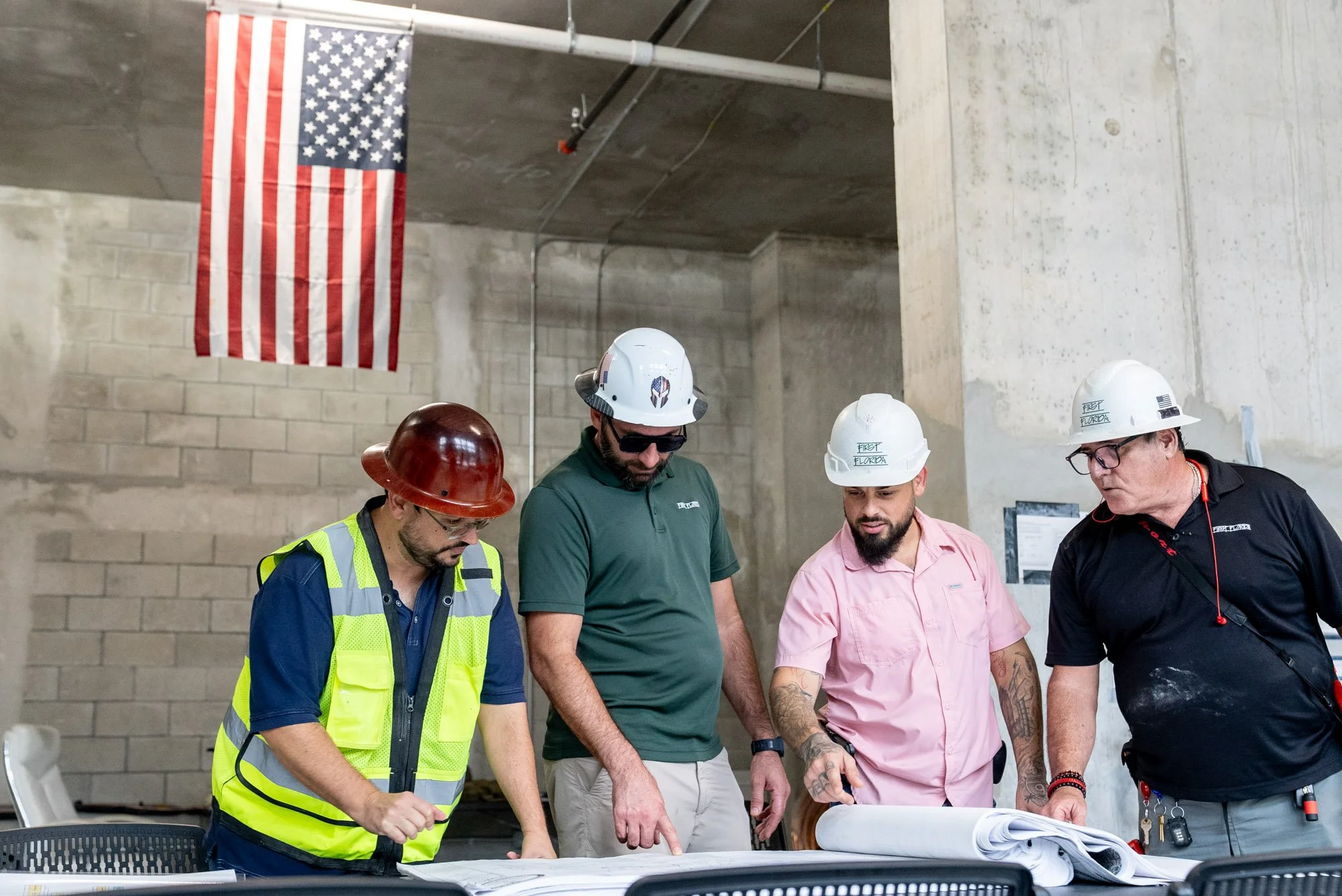
General construction contractors review blueprints at a commercial construction site in Florida.
Construction costs continue to create challenges for contractors, with new data showing a significant increase in the price of inputs used for nonresidential construction. According to an analysis by the Associated General Contractors of America, the producer price index for inputs to new nonresidential construction increased 7.1% from July 2025 to July 2026.
The increase comes as contractors continue to navigate higher material prices, labor costs, and uncertainty around tariffs and trade policy. For Florida contractors, these trends can affect everything from estimating and bidding to project budgets and timelines.
Petroleum Products and Metals Continue to Drive Increases
Some of the largest price increases are concentrated in petroleum products and metals, many of which are subject to tariffs of up to 50%. Diesel fuel prices increased 44.2% year over year, while liquid asphalt prices rose 45.2%.
Metal prices also saw substantial increases. Aluminum mill shapes rose 40.5%, steel mill products increased 22.5%, and copper and brass mill shapes climbed 18.4% over the same period. These increases can have a significant impact on projects that depend heavily on these materials and products.
Material and Labor Costs Reach New Highs
The cost increases are not limited to petroleum products and metals. Several other construction materials are rising at their fastest rates in years. Lumber and plywood prices increased 9.9%, marking their largest year-over-year increase since March 2022. Paving mixtures and blocks rose 6.6%, their highest increase in three years, while construction plastics increased 5.0%, the largest increase since January 2023.
Labor costs are also adding to the pressure. Average hourly earnings for production and nonsupervisory construction employees increased 5.2% from July 2025 to July 2026, compared with a 3.2% increase across the broader private sector. For contractors, rising wages make workforce investment important while also adding another factor to project cost calculations.
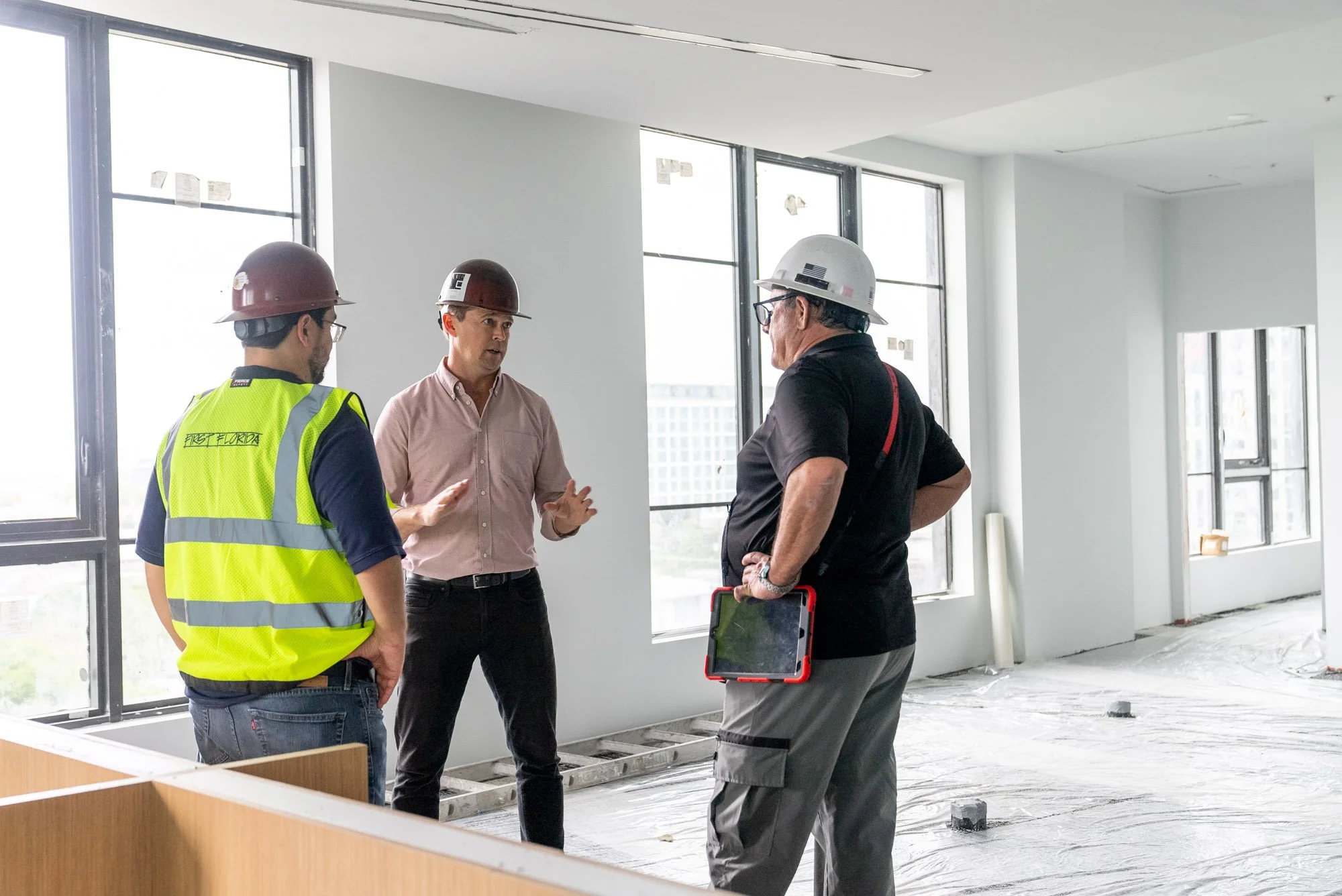
Commercial general contractors discuss project plans inside a Florida construction site.
Greater Certainty Could Help Keep Projects Moving
The Associated General Contractors of America is calling for reduced and more stable tariffs on construction inputs, along with prompt action on a long-term highway and transit funding bill. Association officials warn that without greater certainty and additional funding, some private and public projects could be scaled back, delayed, or abandoned.
For contractors, more predictable costs and funding would make it easier to estimate projects accurately, bid with confidence, plan investments in workers and equipment, and keep projects moving forward. As construction input costs continue to change, staying informed about market conditions and policy decisions remains important for businesses planning their next projects.
AGC of Greater Florida helps general contractors, commercial contractors, and trade partners stay connected to advocacy for Florida’s commercial construction industry, education, networking opportunities, and construction industry resources. Learn more about AGC of Greater Florida membership.
Frequently Asked Questions
-
Liquid asphalt rose 45.2% year over year, diesel fuel increased 44.2%, and aluminum mill shapes rose 40.5%. Steel mill products increased 22.5%, while copper and brass mill shapes climbed 18.4%.
-
Many petroleum products and metals are subject to tariffs of up to 50%. The draft connects uncertainty around tariffs and trade policy with higher material prices, project budgets, estimating, bidding, and timelines for Florida contractors.
-
Higher diesel and metal prices can affect projects that depend heavily on those materials and products. They can also add pressure to estimating, bidding, project budgets, and timelines.
-
Average hourly earnings for production and nonsupervisory construction employees increased 5.2% from July 2025 to July 2026, compared with 3.2% across the broader private sector.
-
For general construction contractors, more predictable costs and funding make it easier to estimate projects accurately, bid with confidence, plan investments in workers and equipment, and keep projects moving forward.
Follow along with our Build Report series, where we keep you updated with all the latest news in the construction industry: