How AI Advancements Could Reshape the Construction Workforce
Artificial intelligence is transforming the modern workplace, particularly in professions that rely heavily on digital tasks. But for industries built on hands-on expertise and real-world problem solving, the outlook looks different. Research suggests that the construction industry could benefit from shifting workforce trends due to AI.
A Look at AI and the Labor Market
A study from Anthropic, the developer of Claude, examines how AI tools are being used across occupations and which job tasks are most likely to be affected. By pairing theoretical AI capability analysis with real-world usage data, the report offers a clearer picture of which industries may experience the greatest changes in the years ahead.
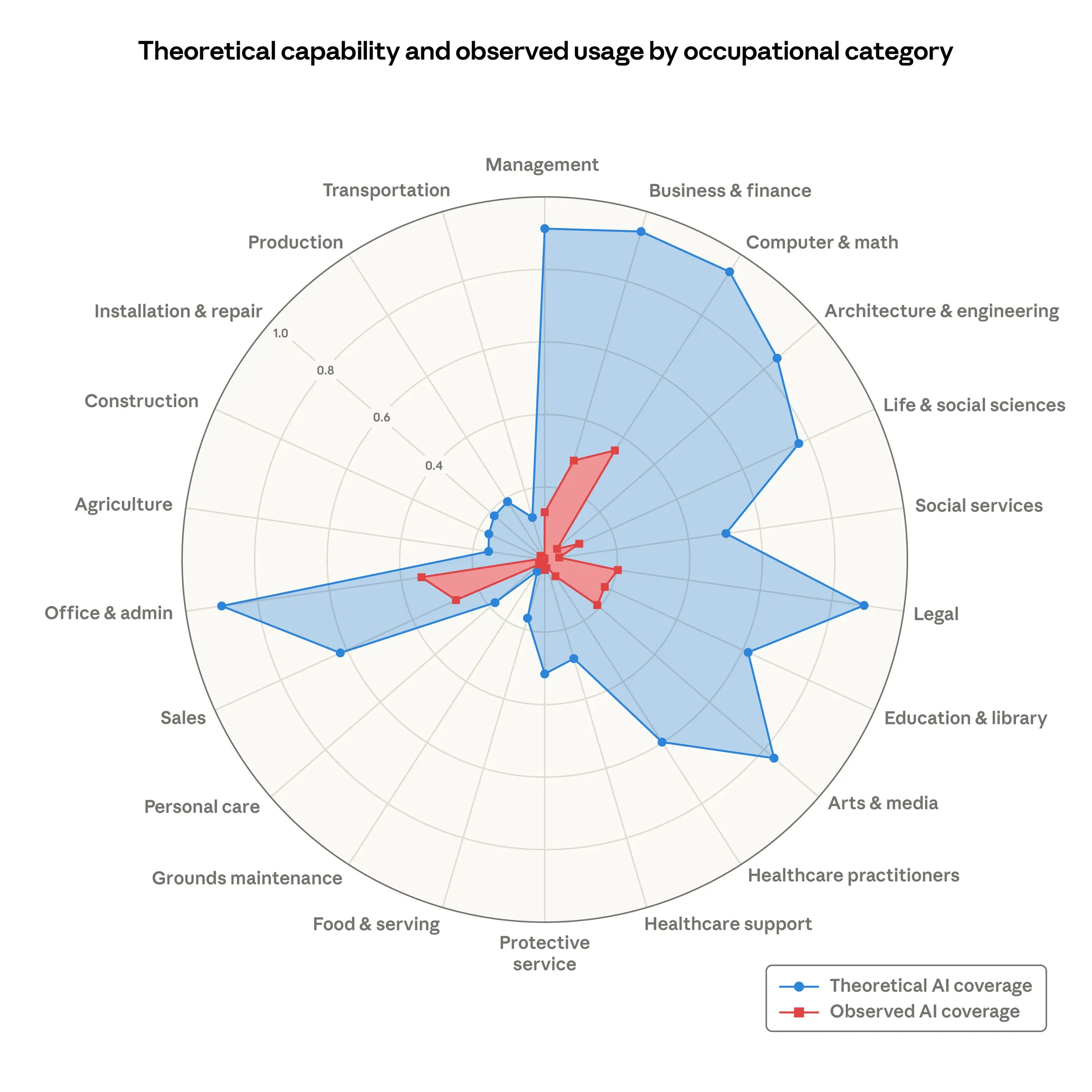
As the chart above shows, the greatest exposure appears in fields such as management, business and finance, computer and math, and architecture and engineering. These professions rely heavily on digital tasks, such as writing, data analysis, and documentation, which are areas where AI tools are advancing quickly.
Construction Remains One of the Least Affected Fields
The data also shows that industries built around manual labor will remain far less exposed. Construction, installation and repair, production, transportation, agriculture, and food service appear near the lowest levels of AI impact. Construction work depends on real-world coordination, technical expertise, and the ability to solve problems on active job sites. While AI may assist with planning or administrative work, the core work of building projects will continue to rely on skilled professionals.
A Shifting Workforce Landscape
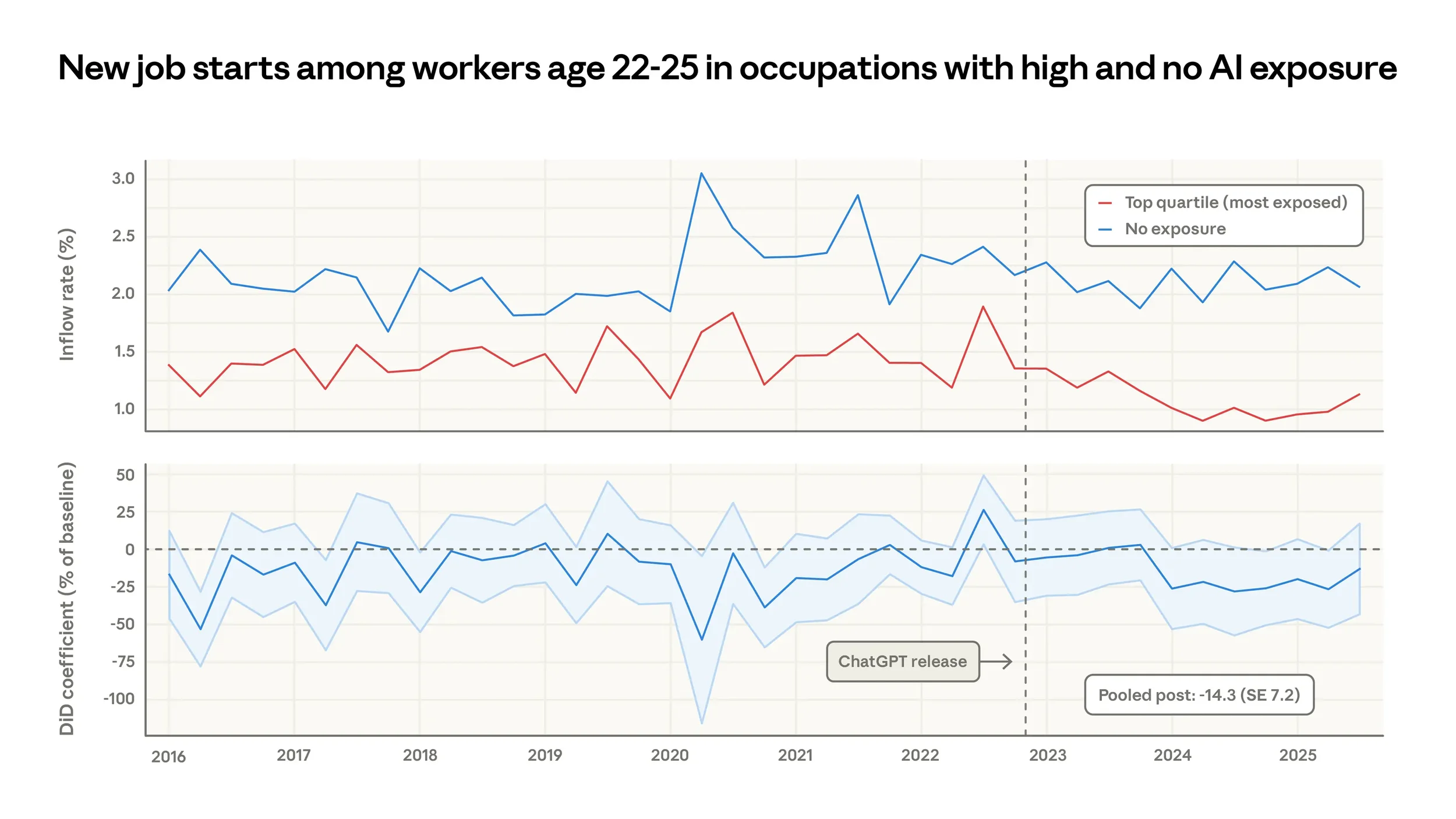
One of the most significant findings in the research is that hiring may already be slowing for younger workers in occupations with higher AI exposure. If entry-level opportunities become more limited in white-collar fields, graduates and early-career professionals will begin looking toward other industries.
For construction, this shift could open the door to a broader and more diverse talent pipeline. Industries that rely on hands-on work and practical expertise may become increasingly attractive to young workers seeking stable careers with long-term opportunity.
A Clear Opportunity for Construction Employers
For employers who have struggled with workforce shortages in recent years, this moment represents a significant opportunity. As AI reshapes other sectors, construction companies have a chance to attract talented individuals who may not have previously considered careers in the industry. Many of these workers will bring strong analytical skills, technical knowledge, and a willingness to learn.
This makes investment in workforce development more important than ever. Companies that expand training opportunities and actively promote construction careers will be well positioned to welcome the next generation of workers entering the labor market.
Follow along with our Build Report series, where we keep you updated with all the latest news in the construction industry: